UN Sounds Alarm as U.S. Military Action in Venezuela Sparks Global Tension
The international community was thrown into a state of heightened alert as United Nations Secretary-General António Guterres voiced serious concern over reported U.S. military operations in Venezuela, warning that the escalation could destabilize the region and erode long-standing norms of international law. In a statement delivered by UN spokesman Stéphane
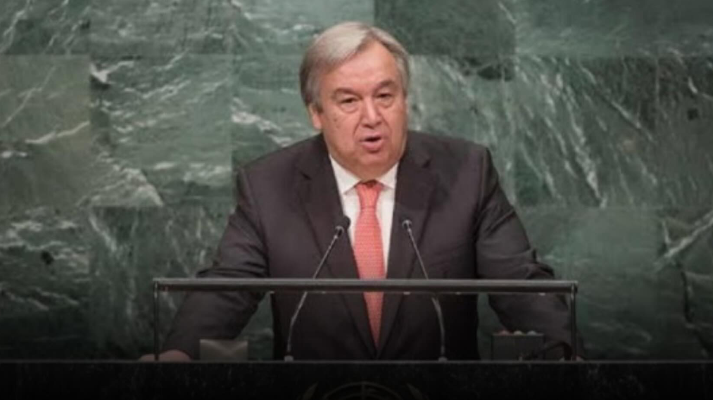
The international community was thrown into a state of heightened alert as United Nations Secretary-General António Guterres voiced serious concern over reported U.S. military operations in Venezuela, warning that the escalation could destabilize the region and erode long-standing norms of international law. In a statement delivered by UN spokesman Stéphane Dujarric, Guterres described the development as a “dangerous precedent,” stressing the urgent need for all parties to respect the principles outlined in the UN Charter and established rules governing the use of force. The Secretary-General’s statement came amid growing reports that American forces have entered Venezuelan territory and taken decisive action against President Nicolás Maduro’s government, triggering fears of a broader geopolitical confrontation.
Guterres, whose office has consistently sought to mediate tensions in conflict zones worldwide, highlighted the potential ramifications of unilateral military action on regional stability, warning that even limited operations could spiral into a more extensive crisis. He emphasized that any escalation in Venezuela could not only endanger the lives of ordinary Venezuelans but also destabilize neighboring countries that are already grappling with complex political and economic challenges. According to the statement, the Secretary-General urged all actors in Venezuela to step back from confrontation and pursue inclusive dialogue rooted in respect for human rights, democratic institutions, and the rule of law. He called on the international community to reaffirm its commitment to peaceful solutions and to resist actions that might set a dangerous precedent for unilateral military interventions.
The warning from the United Nations comes at a time of heightened tension between Washington and Caracas. According to sources, U.S. military involvement in Venezuela was justified by officials in Congress as necessary to counter perceived threats emanating from Maduro’s administration. Congressman Riley M. Moore, a vocal advocate of robust action in Latin America, defended the operation, claiming that Maduro’s government has persistently enabled drug trafficking and provided a foothold for rival powers such as China, Russia, and Iran to expand their influence in the Western Hemisphere. Moore, speaking on a news platform, asserted that the United States could no longer tolerate these threats, framing the intervention as both a defensive and strategic necessity for regional security. He suggested that decisive action was required to ensure that Venezuela does not become a base for operations that undermine U.S. interests or threaten the stability of neighboring democracies.
The situation has provoked sharp reactions from both regional actors and global powers. Governments across Latin America have expressed concern over the reported military action, with several urging restraint and calling for adherence to diplomatic channels. Analysts note that Venezuela occupies a critical geopolitical position, with its vast oil reserves, strategic ports, and political alliances making any conflict a matter of global interest. The U.N. Secretary-General’s remarks reflect growing unease among international policymakers that unilateral military interventions could undermine decades of agreements designed to manage international conflict through diplomacy and multilateral oversight.
Experts also warn that the current crisis may exacerbate existing humanitarian challenges in Venezuela. The country has been grappling with economic collapse, political unrest, and widespread shortages of essential goods for several years. Humanitarian organizations have cautioned that military operations could worsen the plight of civilians, disrupt aid delivery, and trigger further displacement of populations both within Venezuela and across its borders. Guterres’ call for inclusive dialogue is therefore seen not only as a legal imperative but as a necessary step to prevent a deepening humanitarian catastrophe.
Meanwhile, U.S. officials insist that their actions are targeted and intended to neutralize threats that they say Maduro’s government has long tolerated. Supporters of the operation argue that previous diplomatic efforts failed to curb the influence of foreign powers in Venezuela and that immediate measures were required to secure the region. Moore’s statements underscored this perspective, framing the U.S. role as protective of democratic norms and regional stability. He claimed that failing to act decisively would embolden adversaries, creating a vacuum in which rival powers could expand their reach at the expense of local populations and U.S. allies.
The unfolding developments have ignited debates within international legal circles about the legitimacy of the intervention. The principles of sovereignty and non-intervention, enshrined in the U.N. Charter, are central to these discussions. Critics argue that any military operation without explicit Security Council authorization risks violating international law, potentially eroding the framework designed to prevent unilateral use of force. Guterres’ warning appears to reinforce this view, reminding global leaders that actions taken in one country can have far-reaching consequences that extend well beyond national borders.
Observers also note the complex dynamics at play in the Venezuela situation. While the U.S. frames its intervention as a defensive measure against transnational threats, Maduro’s government portrays it as an act of aggression and a violation of Venezuela’s sovereignty. The divide has created a tense standoff, with both sides seeking to rally domestic and international support. Within Venezuela, the situation has heightened fears of escalating conflict, with citizens reporting increased military presence, roadblocks, and heightened security measures in key urban centers. Analysts caution that prolonged uncertainty could fuel unrest, deepen political polarization, and undermine efforts to achieve meaningful dialogue.
Regional organizations have stepped forward in an attempt to mediate. The Organization of American States (OAS) and other multilateral bodies have urged restraint, emphasizing the need for negotiations and diplomatic engagement rather than unilateral military solutions. They echo the Secretary-General’s message that sustainable peace in Venezuela can only be achieved through inclusive processes that respect human rights and uphold the principles of international law. The challenge, they note, is balancing security concerns with the need to avoid actions that could exacerbate an already volatile situation.
International reactions have also highlighted the broader geopolitical implications of the crisis. Analysts point out that Venezuela’s relationships with China, Russia, and Iran make the situation a flashpoint in global power dynamics. Any military intervention risks triggering responses from these nations, potentially leading to an escalation that could extend far beyond the Western Hemisphere. Guterres’ warning that the development sets a “dangerous precedent” reflects these concerns, signaling that unilateral military operations may erode norms that govern international behavior and increase the likelihood of similar conflicts elsewhere.
As the situation continues to unfold, the United Nations has called on all parties to exercise maximum restraint and to engage in dialogue that prioritizes human rights, democratic governance, and the protection of civilians. Guterres’ office emphasized that the current crisis is a test of international mechanisms designed to prevent conflict and uphold the rule of law. The Secretary-General’s message is clear: while nations have legitimate security concerns, actions that circumvent international law threaten the stability of the global order and may produce consequences that extend far beyond immediate military objectives.
For now, the world watches closely as the situation in Venezuela develops. U.S. officials maintain that their operations are necessary to safeguard regional stability, while the United Nations and international observers stress the importance of legal norms, diplomacy, and humanitarian considerations. With tensions high, the coming days and weeks will be critical in determining whether the crisis escalates into wider conflict or whether diplomatic solutions can prevail. The outcome will not only shape the future of Venezuela but also test the resilience of international law and the mechanisms designed to prevent unilateral military actions from destabilizing entire regions.
Share this post
Related Posts

Tiwa Savage Opens Up on Balancing Stardom and Motherhood: ‘My Baby is the Sweetest Boy on Earth’
In a world where fame often comes with sacrifice, Tiwa Savage has once again shown...

MrBeast Turns Down $5 Million Gambling Deal to Protect Brand and Principles
Jimmy Donaldson, better known as MrBeast, has once again proven that not all influencers can...

“They Were Never Hidden”: Ned Nwoko Fires Back as Court, Not Him, Sets Conditions for Regina Daniels’ Access to Children
The simmering domestic dispute between Nollywood actress Regina Daniels and her estranged husband, Nigerian senator...