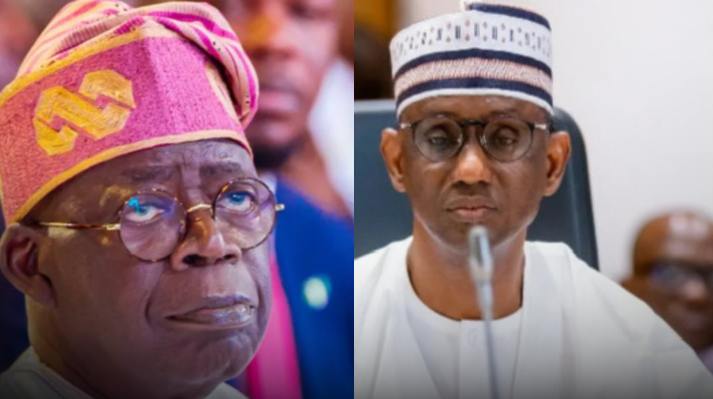
Tinubu Hails Ribadu as Nigeria’s Security Linchpin Amid Rising Political Tensions
President Bola Tinubu has publicly lauded National Security Adviser Nuhu Ribadu, describing him as “honest, bold, courageous and committed” in Nigeria’s ongoing battle against terrorism and banditry, in remarks that have further elevated Ribadu’s standing at the center of the country’s security architecture. The president’s endorsement came during an official
President Bola Tinubu has publicly lauded National Security Adviser Nuhu Ribadu, describing him as “honest, bold, courageous and committed” in Nigeria’s ongoing battle against terrorism and banditry, in remarks that have further elevated Ribadu’s standing at the center of the country’s security architecture. The president’s endorsement came during an official visit to Yola on Monday, where he inaugurated a series of projects completed by the Adamawa State Government and addressed local leaders, residents, and political stakeholders.
Speaking before a crowd of supporters and dignitaries, Tinubu expressed confidence that Nigeria would overcome its security challenges under Ribadu’s coordination, stating unequivocally that the National Security Adviser was delivering measurable results. “I must say clearly here that you are doing an excellent job, and we have seen the results. With you, we will defeat the bandits and terrorists,” Tinubu declared, drawing applause from attendees and reinforcing the administration’s narrative that its security strategy is yielding progress. He added that both he and the people of Adamawa State were proud of Ribadu, who hails from the northeastern state and has long been regarded locally as a symbol of reformist leadership and anti-corruption resolve.
The president’s praise did not occur in a vacuum. It arrived at a moment of heightened political attention on Nigeria’s security leadership, particularly amid tensions between Ribadu and former Kaduna State governor Nasir el-Rufai. Observers note that Tinubu’s public affirmation of confidence in Ribadu sends a clear signal of presidential backing at a time when elite disagreements over strategy, accountability, and political alignment have become more visible within the ruling coalition and among northern political heavyweights. While the details of the friction between Ribadu and el-Rufai remain largely confined to political circles and media speculation, the optics of the president’s remarks suggest a deliberate effort to close ranks around his national security team.
Ribadu, a former anti-corruption czar who first rose to prominence as the pioneering chairman of the Economic and Financial Crimes Commission, has been tasked since 2023 with coordinating Nigeria’s multifaceted response to insecurity. His portfolio encompasses counterterrorism, counterinsurgency, intelligence integration, and inter-agency collaboration across the military, police, and civil intelligence services. Supporters within government credit him with improving coordination between previously fragmented security institutions and prioritizing intelligence-led operations against armed groups operating in the North-West and North-East. They point to recent offensives, targeted arrests, and the disruption of kidnapping networks as evidence that a more unified approach is gaining traction.
Critics, however, argue that insecurity remains stubbornly entrenched across several regions, with mass abductions, rural attacks, and clashes continuing to strain public confidence. They caution that measurable gains remain uneven and that structural factors—ranging from poverty and arms proliferation to porous borders and weak local governance—limit the speed at which security conditions can improve. For these observers, Tinubu’s emphatic praise of Ribadu reflects both political loyalty and the necessity of projecting resolve amid public anxiety about safety and stability. Yet even some critics acknowledge that presidential support is crucial for any National Security Adviser seeking to enforce coordination across powerful institutions.
Tinubu’s remarks in Yola were delivered against the backdrop of ongoing efforts by state governments in northern Nigeria to complement federal security operations with local initiatives, including community policing structures, vigilante support programs, and socio-economic interventions aimed at reducing recruitment into armed groups. The Adamawa projects inaugurated during the visit were framed by the president as part of a broader development-security nexus, emphasizing that infrastructure, education, and social investment are essential to long-term stability. By linking governance delivery with security outcomes, Tinubu underscored a recurring theme of his administration: that combating violence requires not only military force but also economic inclusion and political legitimacy at the grassroots level.
The symbolism of Yola as the setting for the president’s endorsement also carries weight. Adamawa State has experienced both insurgent violence and communal tensions over the past decade, and Ribadu’s personal roots there amplify the political resonance of Tinubu’s praise. Local leaders present at the event reportedly echoed the president’s sentiments, describing Ribadu as a son of the soil whose national responsibilities have not severed his connection to the region’s aspirations for peace. Such framing reinforces the narrative of a technocratic reformer entrusted with safeguarding the nation while remaining anchored in local identity—a powerful political image in Nigeria’s federal landscape.
Meanwhile, the mention of el-Rufai in political commentary surrounding the event highlights enduring rivalries within northern elite networks. The former Kaduna governor, once a prominent figure within Tinubu’s political coalition, has in recent months adopted a more independent posture, occasionally voicing criticisms or divergent views on governance and security. Analysts suggest that disagreements between el-Rufai and Ribadu may stem from differences in approach to counterinsurgency, political alignment, or influence within northern politics. Tinubu’s public embrace of Ribadu, therefore, not only validates the NSA’s performance but also signals the president’s choice of trusted interlocutor on security matters.
For Tinubu, maintaining a clear line of authority in national security is essential to his broader governance agenda. Nigeria’s security landscape involves overlapping jurisdictions and strong institutional personalities, making coherence difficult without firm presidential direction. By declaring that Ribadu is doing an “excellent job,” Tinubu effectively consolidates accountability within his chosen security leadership framework. The message to both domestic and international audiences is that the administration stands united behind its strategy, even as it acknowledges the scale of the challenge.
International partners monitoring Nigeria’s security trajectory are likely to read the endorsement as confirmation of continuity in policy direction. Ribadu has engaged extensively with foreign governments and multilateral bodies on intelligence sharing, counterterrorism cooperation, and capacity building, positioning himself as a central interlocutor between Nigeria and its allies. Tinubu’s praise therefore reassures partners that Abuja’s security coordination remains stable despite internal political frictions. Such reassurance matters in a context where regional instability in the Sahel and transnational militant networks heighten the stakes of Nigeria’s domestic security performance.
At the same time, public expectations remain high. Nigerians across affected regions continue to demand tangible improvements in safety, particularly regarding kidnapping, rural attacks, and displacement. Civil society groups and local communities often measure success not by strategic coordination but by lived experience: the ability to travel safely, farm without fear, and send children to school without threat. Tinubu’s confident tone in Yola reflects optimism within government circles, yet it also raises the bar for demonstrable progress. If conditions improve visibly, Ribadu’s reputation as an effective coordinator will solidify; if not, critics may interpret the president’s endorsement as premature.
Within Adamawa, the president’s remarks were received with visible pride. Political leaders and traditional authorities framed Ribadu’s national role as evidence of the state’s contribution to Nigeria’s leadership cadre. The local dimension of Tinubu’s praise—emphasizing that both he and the people of Adamawa are proud of Ribadu—strengthens regional identification with federal power structures, an important dynamic in a federation where perceptions of inclusion or marginalization often shape political sentiment. By highlighting Ribadu’s origin alongside his national achievements, Tinubu fused regional pride with federal authority.
As Nigeria navigates complex security realities, the relationship between the president and his National Security Adviser remains pivotal. Tinubu’s Yola declaration effectively places Ribadu at the forefront of the administration’s promise to defeat banditry and terrorism, tying the NSA’s performance to the government’s broader credibility. The political tensions involving el-Rufai add another layer of intrigue, suggesting that security leadership is not only a matter of policy but also of influence within elite networks. Yet the president’s message was unmistakable: Ribadu has his confidence, and the fight against insecurity will proceed under his coordination.
Whether this public endorsement translates into accelerated progress on the ground will be closely watched in the months ahead. For now, Tinubu’s praise has elevated Ribadu’s stature, reinforced the administration’s narrative of strategic coherence, and signaled unity in the face of both external threats and internal political complexities. In a country where security remains the foremost public concern, such declarations carry weight far beyond ceremonial applause in Yola, shaping perceptions of leadership, accountability, and the path toward lasting stability.
Share this post
Related Posts

NYSC Begins ₦77,000 Monthly Stipend Payment as Corps Members Rejoice
The National Youth Service Corps (NYSC) has officially begun the payment of the newly approved...
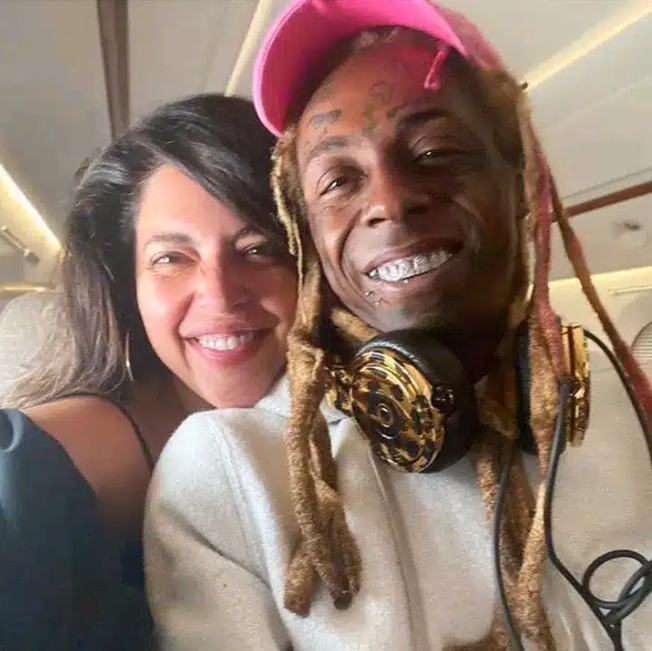
Lil Wayne and Denise Bidot’s Tumultuous Breakup Sparks Controversy
Renowned rapper Lil Wayne has found himself at the center of controversy after his former...

\"My Husband Is Not a Womanizer\": Ruby Ojiakor Sets the Record Straight with Heartfelt Tribute to Husband Moc Madu
In a world where celebrity relationships are often marred by scandals, allegations, and public breakups,...