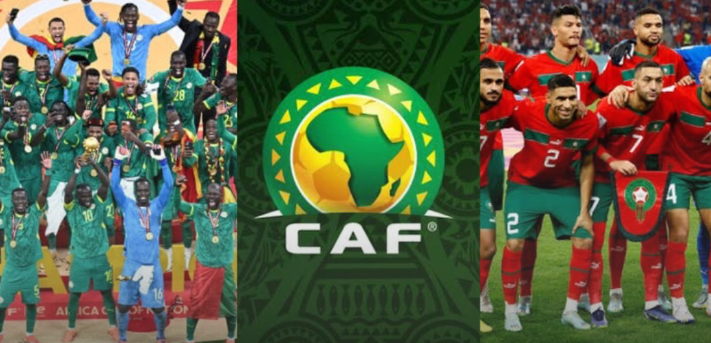
Senegal Takes CAF to Court After Controversial AFCON Verdict Sparks Outrage
A major controversy has erupted in African football after the Senegalese Football Federation (FSF) openly rejected a ruling by the Confederation of African Football, describing the decision as unfair, unprecedented and unacceptable. The dispute centers on a controversial verdict regarding a disputed match between Senegal and Morocco in the qualification
A major controversy has erupted in African football after the Senegalese Football Federation (FSF) openly rejected a ruling by the Confederation of African Football, describing the decision as unfair, unprecedented and unacceptable. The dispute centers on a controversial verdict regarding a disputed match between Senegal and Morocco in the qualification process for the 2025 Africa Cup of Nations. The situation has now escalated beyond football governance after Senegal announced plans to challenge the decision in court.
The clash, which was expected to be an important fixture in the road to the 2025 AFCON tournament, has instead become the center of one of the biggest administrative battles currently facing African football. The initial ruling by Confederation of African Football had reportedly favored Senegal in the aftermath of the disputed encounter. However, the organization’s Appeals Board later overturned that decision, awarding a 3-0 victory to Morocco by forfeit, a move that has now triggered outrage within Senegal’s football establishment.
In a strongly worded statement, the Senegalese Football Federation said it was shocked by the reversal and expressed deep disappointment at what it believes undermines both fairness and the integrity of the sport across the continent. According to the federation, the ruling does not only affect Senegal but also sends a troubling message about transparency and justice within African football institutions.
The controversy began after the disputed match between Senegal and Morocco during the qualifiers for the tournament organized by Africa Cup of Nations. Details surrounding the dispute had already generated debate among football analysts and fans, but many expected the issue to be resolved internally within CAF’s disciplinary and appeals structures. Instead, the Appeals Board ruled that Morocco’s right to be heard had not been properly respected during the earlier proceedings, which formed the basis for overturning the original verdict.
While CAF maintained that the decision followed proper legal and procedural considerations, Senegal’s football authorities argue that the outcome itself creates more controversy than it resolves. The FSF acknowledged that it had carefully reviewed the justification provided by the Appeals Board but insisted that the reasoning behind the decision remains flawed and unacceptable.
In its official reaction, the federation declared that the ruling damages the credibility of African football administration. The statement stressed that the decision sets a dangerous precedent that could weaken confidence in CAF’s judicial mechanisms. Officials within Senegal’s football leadership believe the matter goes beyond a single match result and touches on broader issues of governance, fairness, and accountability in continental football.
The federation’s statement also emphasized that Senegal will not simply accept the ruling without further action. Instead, the FSF announced that it intends to challenge the decision through legal channels, effectively dragging CAF into a court battle that could attract international attention. The move signals a significant escalation because disputes involving football federations and governing bodies are typically handled through sports arbitration structures rather than national courts.
Observers believe the situation could eventually reach the Court of Arbitration for Sport if mediation within African football fails to resolve the conflict. While the FSF has not publicly confirmed the exact legal pathway it intends to pursue, the federation made it clear that it considers the Appeals Board’s verdict unjust and inconsistent with the principles of fair play and due process.
For Senegal, the decision is particularly sensitive given the nation’s strong football reputation in recent years. The country has established itself as one of the continent’s most formidable teams, producing top players and maintaining high expectations in major tournaments. Any ruling that affects the team’s performance or qualification pathway for AFCON naturally carries heavy national significance.
Fans across Senegal have already begun reacting to the development on social media, with many expressing frustration and disbelief over the decision. Some supporters argue that African football governance bodies must improve transparency in order to maintain trust among teams, players and fans. Others believe the federation’s decision to challenge CAF legally shows that Senegal is determined to defend its position and ensure that it receives what it believes is fair treatment.
On the Moroccan side, reactions have been more measured, with many observers simply welcoming the Appeals Board’s ruling as a correction of what they believe was a flawed earlier judgment. Morocco, itself one of Africa’s most prominent football nations, has also been keen to ensure that procedural rights within football disciplinary processes are respected.
The controversy highlights the growing complexity of football governance in Africa, where administrative decisions increasingly attract legal scrutiny and public debate. As the continent’s football ecosystem continues to grow commercially and competitively, disputes like this illustrate the pressures facing institutions responsible for regulating the sport.
For CAF, the situation presents a delicate challenge. The governing body must now defend the credibility of its judicial processes while managing tensions between two influential member federations. Maintaining unity and trust within African football will likely require careful handling of the dispute in the weeks ahead.
Many analysts believe the case could become a landmark moment for African football governance, particularly if it proceeds to an international sports court. Such a development could force a closer examination of how disciplinary and appeals procedures are conducted within CAF and whether reforms might be needed to strengthen fairness and transparency.
Meanwhile, preparations for the 2025 AFCON tournament continue across the continent, but the controversy surrounding the Senegal–Morocco case risks overshadowing the excitement that typically surrounds Africa’s biggest football competition. The longer the dispute remains unresolved, the greater the potential impact on the tournament’s buildup.
For now, Senegal’s football authorities appear determined to pursue every possible avenue to challenge the ruling. Their message is clear: the federation believes the verdict undermines justice and fairness, and it is prepared to fight for what it considers the integrity of African football.
As the legal battle looms, football fans across Africa will be watching closely to see how the conflict unfolds. Whether the case leads to a reversal of the decision or reinforces CAF’s authority, it has already sparked an important conversation about governance, transparency, and accountability within the continent’s most beloved sport.
Share this post
Related Posts

“Everything’s Soaked, My Appliances Are Gone”: Alex Unusual Cries Out as Flood Wrecks Her Home
Popular reality TV star and media personality, Alex Unusual, has been left devastated following a...

BREAKING: Nollywood Veteran Actor Tom Njemanze is Dead 💔
The Nigerian film industry has been thrown into mourning following the shocking death of Nollywood...
US and China Reach Temporary Tariff Reduction Deal to Ease Trade War
In a significant move to ease tensions between the world’s two largest economies, the United...