“Nigeria’s Silence on Venezuela Crisis: A Shameful Abdication of Leadership, Says Opposition
In the wake of one of the most dramatic international crises of the year, Nigeria finds itself at the center of sharp domestic critique — not for its actions, but for its conspicuous lack of them. While the world grapples with the fallout from a bold United States military operation
In the wake of one of the most dramatic international crises of the year, Nigeria finds itself at the center of sharp domestic critique — not for its actions, but for its conspicuous lack of them. While the world grapples with the fallout from a bold United States military operation in Venezuela that led to the capture of President Nicolás Maduro and his wife, Cilia Flores, Nigeria’s government has remained eerily silent, a stance that has ignited condemnation from political figures and policy observers alike.
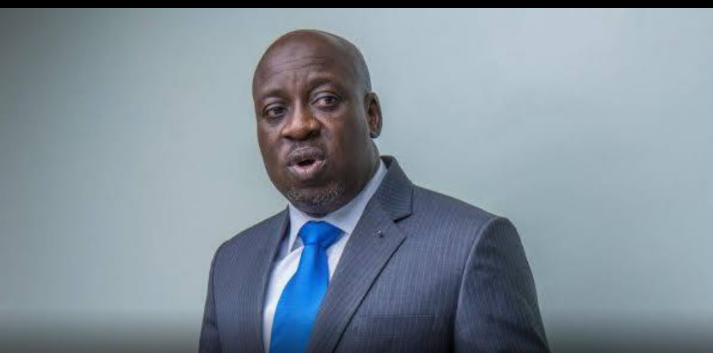
The African Democratic Congress (ADC), a significant opposition party in Nigeria, unleashed blistering criticism of the Federal Government this week, accusing President Bola Tinubu’s administration of abandoning the country’s historical role as a leading voice on the African continent and in global diplomacy. Bolaji Abdullahi, the party’s National Publicity Secretary, underscored the depth of the frustration over Nigeria’s response — or lack thereof — to an event that many international commentators are describing as a seismic moment with implications for global order, sovereignty, and the future of international law.
The controversy began unfolding publicly after the United States launched what it described as a targeted military operation inside Venezuela over the weekend, a move that resulted in the capture of Nicolás Maduro, a polarizing figure whose presidency has been deeply divisive both inside Venezuela and abroad. U.S. officials reported that the operation involved airstrikes and special forces deployments that culminated in Maduro’s removal from power and subsequent transfer to U.S. custody, where he now faces federal charges. The assault has sent shockwaves through Latin America and beyond, rattling diplomatic circles and prompting urgent discussions about the legality and future ramifications of such a unilateral action.
Despite global attention and reactions from diverse actors — including reports of mourning in Venezuela for those killed in the attack, intense internal security measures in Caracas to suppress unrest, and diplomatic condemnations from a number of nations — Nigeria’s federal government has not publicly articulated a position on the matter. Other West African countries have already begun to weigh in, some condemning the U.S. action and others expressing concern over the implications for national sovereignty. Yet Nigeria, Africa’s most populous nation and historically one of its most influential diplomats, has remained conspicuously absent from official commentary.
“That Nigeria is nowhere to be found in this conversation is embarrassing,” Mr. Abdullahi said in a televised interview on Channels Television’s Politics Today. “We are a country that once stood on the world stage, whose leaders boldly articulated positions on global crises. To say nothing now, at such a defining moment, is shameful and unworthy of a nation that aspires to lead Africa.”
The ADC’s rebuke is not merely rhetorical. In its statement, the party lamented that Nigeria’s silence spoke to a broader loss of confidence and moral authority — a retreat from the diplomatic prominence it once wielded, particularly during periods of pan-African solidarity on issues ranging from colonial liberation struggles to regional conflicts. The party compared Nigeria’s current reticence unfavorably to the positions taken by other African states, many of which have either protested the U.S. intervention or called for adherence to established rules of international law governing sovereignty and non-interference.
To critics, the silence also raises uncomfortable questions about Nigeria’s own foreign policy posture under President Tinubu. Analysts note that the absence of a firm stance on a crisis with global repercussions may signal a shift toward a more cautious, reactive foreign policy, rather than the assertive and principled positions historically associated with Nigerian diplomacy. For some, this retreat is emblematic of deeper issues within the current administration’s approach to international affairs and strategic priorities.
The Venezuelan crisis itself has rapidly evolved into a complex geopolitical saga. According to multiple reports, the U.S. operation — dubbed “Operation Absolute Resolve” — involved a sizeable military effort, including airstrikes and special forces deployments. The raid reportedly resulted in the deaths of dozens of Venezuelan and allied personnel, including Cuban security officers, and sparked a wave of unrest in the region. Venezuela’s acting government, installed after Maduro’s capture, has declared periods of national mourning and intensified security measures. Meanwhile, global reactions vary widely: some governments decry the U.S. action as a violation of international law, others question the legitimacy of Maduro’s leadership based on contested elections, and many are evaluating how the crisis could reshape diplomatic alignments.
Within Nigeria, the issue has also prompted responses from foreign policy thinkers and development experts. A recent roundtable hosted by the Nigerian Institute of International Affairs (NIIA) brought together diplomats, scholars, and policy practitioners to assess the implications of the U.S. intervention and the broader challenges it poses for the Global South. Participants raised concerns about the precedent set by unilateral military action, the erosion of norms governing state sovereignty, and the potential ripple effects for other nations wary of similar interventions.
Yet for the ADC and its supporters, broader philosophical debates about international law only underscore the need for Nigeria to engage publicly and decisively. Abdullahi emphasized that silence on the world stage can be interpreted as acquiescence, weakness, or apathy — none of which are befitting for a country that claims leadership in West Africa and across the African continent. “Neutrality is not mere absence of speech,” he said. “If Nigeria chooses to be neutral, that is fine. But to say nothing at all is to forsake responsibility — and to tell the world that we have abdicated our voice.”
Opinions among Nigerians themselves reflect a growing sense of unease about the federal government’s posture. On social media and in public discourse, citizens have questioned what the lack of response means for Nigeria’s influence in global matters, and whether this silence signals a broader disconnect between the country’s diplomatic aspirations and its actions. Across commentaries, ordinary Nigerians and political commentators alike have framed the crisis not just as an international event, but as a litmus test for Nigeria’s relevance on the global stage.
For now, as the Venezuela crisis continues to unfold — with international legal debates, regional security concerns, and diplomatic tensions simmering — Nigeria’s silence remains a subject of sharp domestic critique. Whether the Federal Government will break that silence and articulate a clear stance in the days ahead is still uncertain. But for the ADC and others who have spoken out, the moment has already passed for hesitation. In their view, leadership demands not just presence, but voice — and in this moment of global consequence, Nigeria’s absence from the conversation is an absence the nation may come to regret.
Share this post
Related Posts

Tears in the Auditorium: Sister of Slain British-Nigerian Nurse Receives Her Graduation Award in Heart-Wrenching Moment
It was supposed to be one of the proudest days in the life of British-Nigerian...
“No Intentionality, No Happy Marriage” — Actress Judy Austin Sparks Relationship Debate with Candid Advice
Nigerian actress and filmmaker Judy Austin has ignited fresh conversation across social media after sharing...

Burna Boy Set to Light Up Liverpool Tonight at Jacaranda Baltic
By Busterblog.com – July 17, 2025LIVERPOOL is on fire tonight as global Afrofusion superstar Burna...