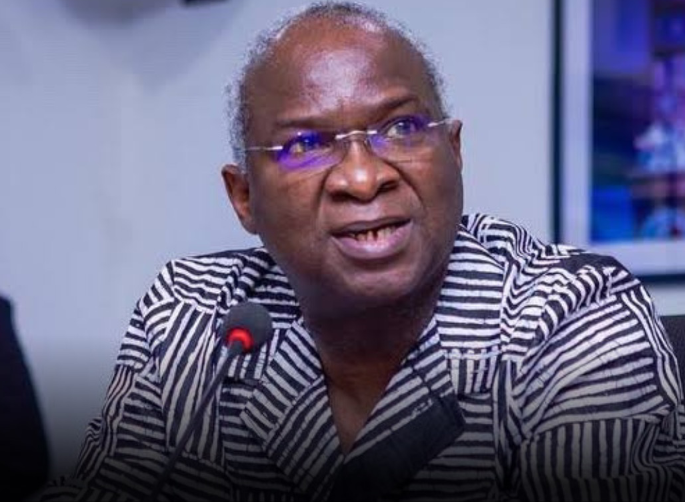
“I’m Proudly and Arrogantly Nigerian — Fashola Declares, Rejects Dual Citizenship
In a declaration that has captured the attention of Nigerians at home and abroad, former Lagos State Governor and immediate past Minister of Works, Babatunde Fashola, emphatically stated that he does not hold dual citizenship, insisting that his loyalty and identity are firmly rooted in Nigeria. Speaking on Tuesday in
In a declaration that has captured the attention of Nigerians at home and abroad, former Lagos State Governor and immediate past Minister of Works, Babatunde Fashola, emphatically stated that he does not hold dual citizenship, insisting that his loyalty and identity are firmly rooted in Nigeria. Speaking on Tuesday in Abuja during the Nigeria Reputation Summit 2026, organized by the Nigerian Institute of Public Relations, Fashola addressed issues of national identity, migration, patriotism, and the global image of Nigeria.
The keynote address, delivered before an audience of policymakers, public relations professionals, academics, and members of the media, was both a reflection and a call to action. Fashola used the platform to highlight what he described as a recurring disconnect among Nigerians regarding national ownership and responsibility. “Many Nigerians, whether at home or in the diaspora, fail to see the problems of our nation as a shared responsibility,” he said. “They expect solutions to emerge from others while avoiding participation in the challenges we all face as a country. For me, the choice to remain fully Nigerian is not just legal; it is moral, patriotic, and personal.”
Fashola, known for his meticulous approach to governance and his public reputation as a disciplined administrator, addressed rumors that had circulated in recent weeks suggesting he might hold dual citizenship. He dismissed these claims outright, stating with characteristic confidence that he is solely Nigerian. “The constitution allows for dual citizenship,” he acknowledged, “but I choose to be fully, unapologetically Nigerian. I am proud of it. I am, in fact, arrogant about it, because I believe in the potential, dignity, and promise of this country.”
His remarks quickly resonated with Nigerians who have long debated the notion of loyalty, national pride, and the responsibilities of citizens in a country facing systemic challenges. Fashola’s use of the word “arrogant” to describe his Nigerian identity drew particular attention, signaling not hubris but rather an unyielding confidence in his roots and the possibilities inherent in Nigerian society. Observers noted that the phrasing was strategic, capturing a sentiment that many Nigerians abroad struggle with—balancing global opportunities with national loyalty.
The former governor’s speech also explored the broader themes of migration and global mobility, a topic close to the hearts of millions of Nigerians living outside the country. He acknowledged that while migration can provide personal growth, economic opportunity, and professional development, it should not come at the expense of one’s connection to Nigeria. “Being Nigerian is more than holding a passport,” Fashola asserted. “It is about values, commitment, and an unwavering belief in what our country can become. You can work abroad, learn abroad, invest abroad, but that should never dilute your Nigerian identity.”
Fashola’s perspective on national identity aligns with a growing movement among some Nigerian leaders and thinkers who argue for deeper civic engagement and ownership of national challenges. He expressed concern that many Nigerians, especially those in the diaspora, see themselves as detached observers rather than active participants in the country’s development. “We must stop outsourcing our problems,” he said. “Nigeria’s growth, progress, and reputation are our responsibility, collectively. There is no shortcut, and there is no substitute for active participation.”
The event, which drew a cross-section of Nigeria’s public relations, governance, and media professionals, also included discussions on how the country’s image is perceived internationally. Fashola emphasized that reputation is not built solely by government policies or high-profile events, but by the consistent actions of citizens in both local and global contexts. “When we talk about national pride, it’s not just about slogans or patriotism in speeches,” he explained. “It’s about our daily conduct, the choices we make, and our dedication to building institutions, enforcing the rule of law, and fostering an environment where citizens can thrive.”
Throughout his address, Fashola’s message was clear: citizenship is more than a legal status—it is a declaration of allegiance and a moral commitment. By rejecting dual citizenship, he positioned himself as a symbol of steadfast national loyalty, challenging both public figures and ordinary Nigerians to reconsider what it means to belong. His use of the phrase “proudly and arrogantly Nigerian” was repeated multiple times, underscoring that this was not a casual remark but a defining statement of identity.
The keynote also touched on the need for collective responsibility in tackling Nigeria’s persistent challenges, ranging from infrastructure deficits to governance gaps. Fashola argued that patriotism must translate into action and participation, whether through policy advocacy, community engagement, or professional excellence. “Being Nigerian is not about blaming others or expecting someone else to fix our problems,” he said. “It is about taking ownership, contributing, and refusing to settle for mediocrity because of systemic challenges.”
His remarks come at a time when discussions about citizenship, loyalty, and diaspora engagement have intensified globally. With millions of Nigerians living abroad, debates about dual citizenship have become more pronounced, often framed in terms of opportunity, security, and identity. Fashola’s stance adds a different perspective, emphasizing pride, moral conviction, and national responsibility over convenience or strategic advantage.
In response to questions from the press after his keynote, Fashola reiterated his position, emphasizing that his identity as a Nigerian informs every aspect of his life and career. “I do not need another passport to validate my contributions or my beliefs,” he said. “My choices, my career, and my commitment are all rooted in this country, and I am unapologetic about it.”
Social media reactions to Fashola’s declaration were immediate and varied. Many Nigerians applauded his open embrace of national identity, celebrating his message as a reminder of pride in citizenship and the importance of accountability. Some commentators highlighted that his rejection of dual citizenship was both symbolic and strategic, signaling that national loyalty should be a priority for all public officials. Others discussed the philosophical implications of his remarks, debating whether the concept of being “arrogantly Nigerian” could be a motivating force for civic engagement across the country.
The Nigeria Reputation Summit 2026, through Fashola’s keynote, achieved its goal of sparking meaningful dialogue on national identity and global image. His speech was described by participants as thought-provoking, challenging, and unapologetically direct—a reflection of the man himself, known for his rigorous governance style and principled public service.
As Nigeria continues to navigate its complex political, social, and economic landscape, Fashola’s declaration serves as both a call to action and a statement of self-definition. It is a reminder that national identity is not just conferred by birth or legal documents, but cultivated through deliberate choices, ethical conduct, and an unwavering belief in one’s country. By embracing his citizenship fully and rejecting dual allegiances, Fashola positions himself as a model for what it means to be engaged, committed, and unapologetically Nigerian in the 21st century.
Whether his words will inspire a broader national conversation on citizenship, responsibility, and patriotism remains to be seen. But for now, Babatunde Fashola’s message is unmistakable: being Nigerian is not just a matter of law; it is a matter of conviction, pride, and yes, even a touch of arrogance. In a country often criticized for divided loyalties and brain drain, Fashola’s stance is both bold and emblematic of a vision of Nigeria where citizens claim ownership of their nation and its destiny.
Share this post
Related Posts

Top 2025 Lobster News: 110-Year-Old Lorenzo Freed in Stunning Conservation Move
In a heartwarming turn of events that has captured global attention, a massive 110-year-old lobster...
Mongolia’s Prime Minister Resigns as Public Fury Erupts Over Son’s Lavish Lifestyle
In a stunning political development that has sent shockwaves through Mongolia’s government, Prime Minister Luvsannamsrain...
\"Afolashade Has Won\": Bobrisky Declares Womanhood Fully Complete, Sparks New Wave of Reactions Across Nigeria
In a characteristically bold and unapologetic statement, Nigeria’s most controversial and self-proclaimed “Mummy of Lagos,”...