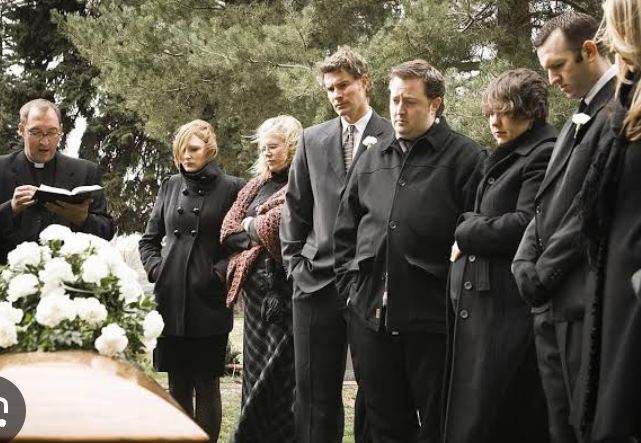
Husband Collects Debt from Late Wife at Her Funeral, Sparks Online Debate
In a story that has left social media users divided between shock and understanding, a young husband reportedly collected money his late wife owed him during her funeral. The incident, which has quickly gone viral on platforms like X (formerly Twitter), involves a lady in her twenties who tragically passed
In a story that has left social media users divided between shock and understanding, a young husband reportedly collected money his late wife owed him during her funeral. The incident, which has quickly gone viral on platforms like X (formerly Twitter), involves a lady in her twenties who tragically passed away during labor. What many expected to be a purely mournful event turned into a peculiar financial transaction that has sparked widespread conversation online.
According to a tweet by @fateeabubakar4, the wife’s death occurred under heartbreaking circumstances, and the funeral followed shortly after. During the customary funeral proceedings, an Alfa asked whether the deceased had any debts. In what many users described as a “stunning” moment, the husband raised his hand to indicate that his late wife owed him 200,000 naira. The revelation sent shockwaves through those following the funeral and later, thousands more online, as the story spread.
“I was mad at first,” wrote one Twitter user, @AyanwaleSegunD, “but on second thought, is it not a procedure in Islam to ask if the deceased owes anyone? In most cases, those owed are expected to indicate and forgive the debt.” This comment captured the essence of the debate: was the husband acting out of duty and religious observance, or was it a moment of insensitivity during an already tragic event?
Many users struggled to reconcile the tragedy of the woman’s death with the unusual financial demand. Social media users expressed everything from disbelief to humor, with some poking fun at the idea of a “funeral loan repayment,” while others criticized the husband for what they viewed as a lack of respect for the deceased. Some comments highlighted the emotional intensity of the moment. The fact that the wife died during labor made the incident even more heart-wrenching, as her husband, friends, and family were already dealing with a devastating loss.
Despite the initial shock, the husband’s action, as clarified by @fateeabubakar4, was resolved quickly. The late wife’s brother reportedly paid the 200,000 naira immediately, which some users pointed to as a sign of familial support and understanding of cultural or religious norms. While this ended the financial aspect of the situation, it did little to quiet the social media debates that followed.
The story has sparked conversations about cultural practices surrounding debt, death, and religious rites. In some Islamic traditions, it is customary to ask if a deceased person owed anyone before funeral prayers are completed. This ensures that debts are cleared, and the deceased can rest in peace without unresolved financial obligations. For some observers, the husband’s action was simply following protocol, not a display of callousness. Others, however, felt that in the emotional and sensitive context of a funeral, financial matters should be deferred.
The incident has also raised questions about societal expectations around mourning and respect. While financial accountability is important, many social media users argued that the timing of such a demand was inappropriate. “Even if it’s legal or religiously sanctioned,” one user commented, “asking for repayment at the moment of someone’s funeral seems cold. There is a time and place for everything.” Others countered that forgiving debts entirely is not always obligatory and that ensuring financial matters are settled can prevent future conflicts among surviving family members.
This story also sheds light on the complexity of modern relationships and financial arrangements. Couples often lend or borrow money from each other for personal and household needs. While many assume that debts between spouses are private or flexible, cultural and religious practices sometimes dictate that such obligations be settled publicly. The incident illustrates how such norms intersect with personal grief, public perception, and online scrutiny.
The online reaction has been divided. Some users applauded the husband for adhering to religious custom and ensuring transparency, noting that settling debts after death is a common practice in certain communities. Others criticized him for seeming to prioritize money over mourning. Memes and jokes about “funeral debts” began circulating, reflecting the mix of humor and disbelief that social media often brings to viral stories.
Interestingly, this story also shows how quickly private family matters can become public discourse in the age of social media. What might have been a small, personal interaction within the family and religious ceremony has now become a viral topic, discussed and dissected by thousands, if not millions, of people worldwide. The viral nature of the story has generated conversations beyond religious or cultural lines, touching on universal themes of respect, mourning, financial ethics, and human empathy.
For some, the resolution of the debt—the wife’s brother paying immediately—brought closure to the financial aspect, but the moral and emotional questions linger. Online discussions reveal a spectrum of opinion, highlighting the diverse ways that people interpret actions taken during moments of grief. While some may see the husband’s action as strict adherence to duty, others interpret it as a reflection of misplaced priorities.
Beyond the ethical debate, the story is a reminder of the fragility of life and the suddenness of loss. The young woman’s passing during labor is a tragedy in itself, and the fact that her death led to such a public discussion about money underscores the complexities of human relationships. In the midst of grief, customs, expectations, and responsibilities intersect in ways that can surprise outsiders and insiders alike.
As the conversation continues online, this incident serves as a case study in the intersection of culture, religion, and social expectations. It prompts reflection on how we handle sensitive situations and balance financial obligations with empathy and respect. The story also illustrates the ways social media amplifies unusual moments, sparking debates that transcend local communities and reach global audiences.
In the end, the young woman’s death is a tragedy that should be mourned, and the resolution of her debt may have followed religious or cultural procedures, but the public reaction shows that timing and context matter greatly in human perception. The incident invites reflection on how rituals, norms, and personal behavior coexist in moments of grief, and how quickly such moments can become topics of widespread conversation.
Whether one sees the husband’s actions as correct, insensitive, or somewhere in between, the story will remain a vivid example of how cultural practices and personal ethics can collide in emotionally charged moments. It reminds everyone that life, death, love, and money are often intertwined in ways that are both complicated and unexpected, and that understanding cultural and religious context is key to interpreting actions that might otherwise seem shocking.
As the tweets continue to circulate, people are debating not just the specifics of this incident, but broader questions about respect, mourning, and financial responsibility. The story may have started with a simple act of asking if a deceased person owed anyone, but it has evolved into a conversation about human behavior, societal norms, and the sometimes uncomfortable intersection of tradition and emotion.
Share this post
Related Posts

A Heartfelt Reunion: Wale Akorede Okunnu Reunites with His Family in Canada After Eight Long Years Apart
Nigerian actor Wale Akorede, popularly known as Okunnu, has shared a moment that has left...

“After I Don Buy Suit?” — Hilarious Exchange Between #HallelujahChallenge Participants Sparks Online Frenzy
The internet never fails to turn moments of faith into moments of laughter, and this...

Governor Seyi Makinde Blasts Works Minister Dave Umahi Over Lagos-Calabar Highway Cost Controversy
Oyo State Governor Seyi Makinde has publicly criticized the Minister of Works, Dave Umahi, urging...