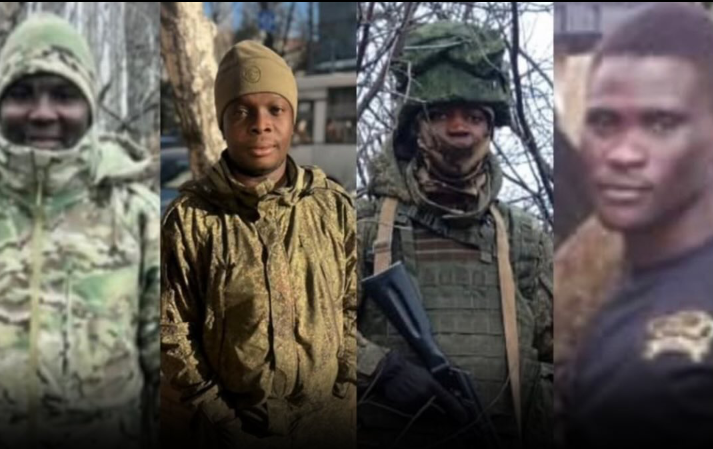
Four Nigerians Deceived Into Fighting for Russia Killed in Ukraine Conflict
In a shocking revelation, at least four Nigerians have reportedly been k+lled after being misled into joining the ongoing w@r in Ukraine, according to an exclusive report by Daily Nigerian. The tragic deaths highlight the dangerous and often murky world of foreign recruitment for conflicts, raising serious concerns about the
In a shocking revelation, at least four Nigerians have reportedly been k+lled after being misled into joining the ongoing w@r in Ukraine, according to an exclusive report by Daily Nigerian. The tragic deaths highlight the dangerous and often murky world of foreign recruitment for conflicts, raising serious concerns about the exploitation of unsuspecting young men seeking employment abroad.
The deceased, identified as Adam Anas, Akinlawon Tunde Quyuum, Abugu Stanley Onyeka, and Balogun Ridwan Adisa, were allegedly lured with promises of legitimate “security jobs” but instead found themselves conscripted into Russia’s military operations in Ukraine. Reports indicate that the men underwent approximately three weeks of training before being deployed to the battlefield, a brief and insufficient preparation for the intensity of modern combat.
According to sources familiar with the case, Anas, Quyuum, Onyeka, and Abubakar Adamu, the only survivor, traveled together to Eastern Europe in November 2025. Balogun Ridwan Adisa, another victim, was reportedly recruited earlier but shared a similar fate. The men’s deaths occurred on different dates between December 2025 and January 2026, emphasizing the ongoing risk faced by foreign mercenaries involved in the conflict.
Family members of the deceased were reportedly kept in the dark about the true circumstances of their loved ones’ deaths. Sources told Daily Nigerian that no official communication came from Russian authorities. Instead, news of the fatalities emerged through a clandestine WhatsApp group reportedly used by African mercenaries in the conflict. Relatives confirmed that they learned of the deaths from colleagues of the victims rather than any formal channels, a revelation that has compounded the anguish surrounding these tragic losses.
The recruitment of the Nigerian men has been traced to an agent identified as Emiola Muhammad. Reports suggest that Muhammad issued tourist visas to the victims, providing a veneer of legitimacy while arranging their deployment to the w@r front. This method of deception underscores a growing problem of human exploitation under the guise of employment opportunities abroad. Victims are often promised well-paying security positions but are instead thrust into life-threatening combat situations with little choice or protection.
The use of social media and encrypted messaging platforms has reportedly played a role in the recruitment and coordination of these foreign fighters. Sources claim that WhatsApp groups have been used not only to organize deployment but also to communicate sensitive information among mercenaries. While these tools provide a means of connection for participants, they also obscure accountability and make it difficult for families and authorities to track the true status of those involved.
The circumstances surrounding these deaths have drawn condemnation from human rights advocates and concerned citizens in Nigeria. Critics argue that the exploitation of young Nigerians under false pretenses represents a broader pattern of predatory recruitment, where the desire for employment is manipulated by unscrupulous actors. The tragic outcomes of Anas, Quyuum, Onyeka, and Adisa are a stark reminder of the dangers inherent in such schemes and the vulnerability of young people seeking better opportunities abroad.
Experts in international conflict and security have warned that Nigeria is not the only country experiencing such recruitment practices. African nationals from several nations have been reported to participate in conflicts in Ukraine, often facing coercion, misinformation, and inadequate training. The lack of formal oversight and the reliance on informal networks make it difficult for governments to protect their citizens or intervene effectively once recruitment has taken place.
Abubakar Adamu, the only known survivor from the November 2025 group, has reportedly returned to Nigeria, though details of his experiences remain scarce. Sources close to Adamu describe him as traumatized by the loss of his colleagues and the violence he witnessed on the battlefield. His survival provides rare insight into the conditions faced by foreign recruits, though his account also raises questions about the adequacy of support for individuals who return from such perilous situations.
The case has prompted renewed calls for stronger regulation and oversight of overseas employment opportunities, particularly those in high-risk sectors such as private security or military engagement. Authorities in Nigeria have historically issued warnings about fraudulent recruitment schemes, but enforcement and public awareness remain inconsistent. Advocates argue that more robust measures, including verification of foreign employers, monitoring of recruitment agents, and public education campaigns, are needed to prevent future tragedies.
Families affected by this incident are now grappling with both grief and outrage. The absence of official notification from Russian authorities has compounded the emotional toll, leaving relatives to seek answers through informal channels. Some family members have expressed frustration with Nigerian diplomatic missions, questioning whether enough is being done to safeguard citizens abroad or respond effectively when incidents occur.
The broader implications of this case extend beyond the immediate tragedy. The use of foreign nationals in conflict zones raises legal, ethical, and diplomatic concerns. Questions about the responsibility of recruiting agents, the accountability of governments, and the protection of vulnerable populations are all brought to the forefront by incidents like these. International organizations have emphasized that mercenary activity is fraught with risk and frequently operates outside the bounds of law, leaving participants exposed to exploitation, injury, or death without recourse.
The deaths of Adam Anas, Akinlawon Tunde Quyuum, Abugu Stanley Onyeka, and Balogun Ridwan Adisa serve as a cautionary tale for young Nigerians considering employment abroad under vague or enticing promises. The lure of quick financial gain must be weighed against the potential for extreme danger and deception. Experts advise that prospective overseas workers thoroughly verify job offers, consult official sources, and remain vigilant against recruitment schemes that lack transparency.
As investigations continue, the hope among families, human rights advocates, and concerned citizens is that greater attention will be paid to the risks associated with foreign recruitment for conflict. The tragedy of these four young men underscores the urgent need for accountability, prevention, and support for those affected by international mercenary activity. Their story is a stark reminder that behind every recruitment scheme lies real human lives, and the consequences of deception can be fatal.
The Nigerian government, civil society organizations, and international partners face a critical moment to examine the mechanisms that allowed these deaths to occur. Ensuring that young Nigerians are not misled into dangerous situations requires a combination of preventive action, public education, and effective diplomatic engagement. Until such measures are strengthened, the risk of similar tragedies remains high, and the families of victims are left to mourn the devastating loss of loved ones taken by circumstances beyond their control.
The deaths of Anas, Quyuum, Onyeka, and Adisa are not merely individual tragedies—they are a reflection of broader systemic issues surrounding recruitment for foreign conflicts and the exploitation of vulnerable populations. Their story demands attention, reflection, and action, serving as a solemn warning to all who might be tempted by opportunities abroad that promise much but conceal deadly realities.
Share this post
Related Posts

“If you say you’ve never knacked me, swear with the Bible” — Cubana Chiefpriest’s baby mama, Helen strikes again 😂
In a dramatic turn of events, Helen, the woman claiming to be the baby mama...

Tears Flow in Nollywood as Actress Mercy Aigbe Mourns the Painful Passing of Her Mother
The Nigerian movie industry has once again been thrown into mourning following the heartbreaking announcement...
Notorious Bandit Bello Turji Issues New Threat, Driving Families from Their Homes
Fear has once again gripped Tidibale, a small farming community in eastern Isa Local Government...