Federal Government Clarifies: Mathematics Remains Compulsory for All O-Level Candidates
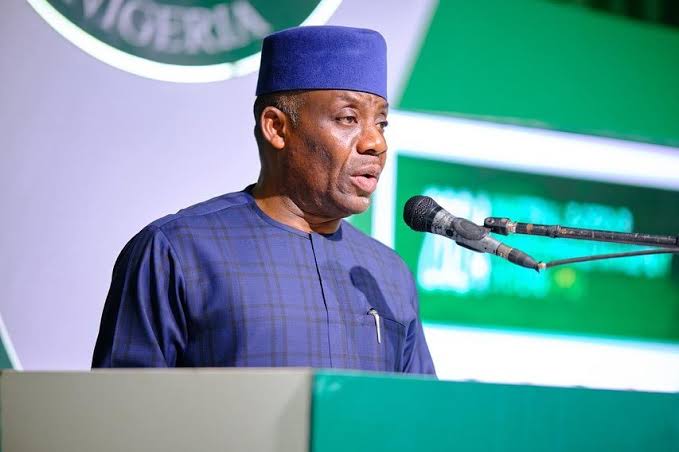
The Federal Government has reaffirmed that Mathematics remains a compulsory subject for all O-Level examinations in Nigeria, quelling widespread confusion over recent reports suggesting otherwise. Minister of Education, Dr. Tunji Alausa, made the clarification during a press briefing in Abuja, where he stood at the podium to address growing public
The Federal Government has reaffirmed that Mathematics remains a compulsory subject for all O-Level examinations in Nigeria, quelling widespread confusion over recent reports suggesting otherwise. Minister of Education, Dr. Tunji Alausa, made the clarification during a press briefing in Abuja, where he stood at the podium to address growing public concern following last week’s policy adjustments to tertiary entry requirements.
According to the minister, while universities may now waive Mathematics as an entry prerequisite for certain arts and social science programs, the subject remains mandatory at the secondary school level. Dr. Alausa emphasized that Mathematics, alongside English Language, forms the foundation of Nigeria’s education system and is indispensable for developing analytical thinking, numeracy, and logical reasoning — essential skills for national progress.
The earlier announcement had triggered nationwide debate after it appeared that Mathematics would no longer be required for humanities-related degrees, leading to misinterpretations that it had been dropped entirely from O-Level requirements. “We are only reforming admission pathways to make higher education more inclusive,” Alausa clarified. “No student will be allowed to complete secondary education without passing Mathematics — it is a core life skill.”
On social media, the government’s clarification quickly trended, with users largely expressing relief and agreement. Many noted that Mathematics had always been compulsory in secondary education, describing the confusion as a product of “poor communication.” Others highlighted how strong mathematical literacy fosters critical thinking, even beyond technical fields like engineering or finance.
Education experts also weighed in, citing a 2023 UNESCO report linking strong math proficiency to 15–20% higher economic productivity in developing nations. The report underscores how numeracy enhances employability, entrepreneurship, and overall economic resilience — outcomes Nigeria cannot afford to overlook amid global competition.
By reinforcing Mathematics as a cornerstone of learning, the Federal Government signals a continued commitment to building a generation of problem-solvers capable of driving innovation and sustainable growth. For now, every Nigerian student will still need to face the numbers — and conquer them.
Share this post
Related Posts

“The Face of a New Nigeria”: Yvonne Jegede Hails Calm Officer Who Stood Up to Wike, Calls Him a Symbol of Hope
In the heated wave of political drama and rising tension across Nigeria’s public space, a...
No More ‘Pay Before Meter’: FG Cracks Down on DisCos, Orders Free Nationwide Meter Installation
In a move set to reshape Nigeria’s electricity billing landscape, the Federal Government has announced...

“You Will Be Embarrassed in Training”— Man United’s Ruben Amorim Issues Ruthless Warning to Underperformers
In a sharp departure from the forgiving tone of modern football management, Manchester United’s newly...