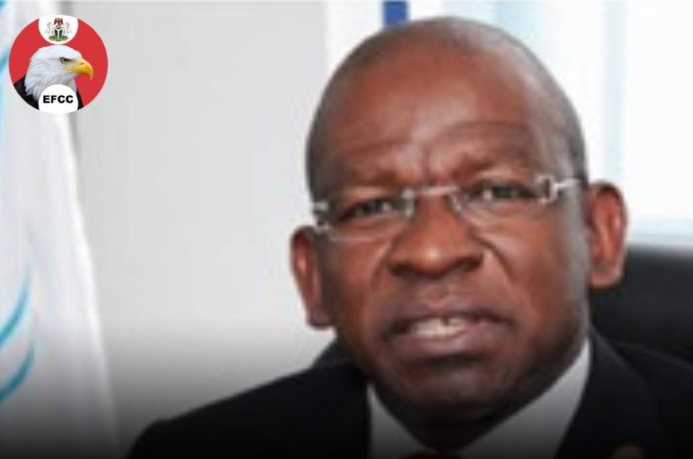
Ex-NEXIM Boss Bags 490 Years in Prison Over ₦2.4bn Fraud
In what has been described as one of the most significant corruption verdicts in recent years, a Federal High Court sitting in Abuja has sentenced the former Managing Director of the Nigeria Export-Import Bank (NEXIM), Robert Orya, to a combined 490 years’ imprisonment over a ₦2.4 billion fraud. The ruling
In what has been described as one of the most significant corruption verdicts in recent years, a Federal High Court sitting in Abuja has sentenced the former Managing Director of the Nigeria Export-Import Bank (NEXIM), Robert Orya, to a combined 490 years’ imprisonment over a ₦2.4 billion fraud. The ruling marks a dramatic conclusion to a long-running legal battle between the former bank chief and the Economic and Financial Crimes Commission (EFCC), which prosecuted the case.
The verdict was confirmed by the EFCC in a statement shared on its official X handle on Thursday. According to the anti-graft agency, Justice F.E. Messiri found Orya guilty on all 49 counts brought against him, leading to a 10-year prison sentence on each count. The cumulative effect of the sentencing amounts to 490 years behind bars, underscoring the gravity of the offences as determined by the court.
Orya, who served as the Managing Director of NEXIM between 2011 and 2016, was accused of abusing his position and orchestrating fraudulent transactions that allegedly led to the diversion and mismanagement of funds amounting to ₦2.4 billion. The EFCC’s case detailed a pattern of financial misconduct, including the unlawful approval of loans and the misapplication of funds entrusted to the bank for export financing and economic development.
NEXIM, a government-owned financial institution, plays a critical role in supporting Nigeria’s non-oil export sector by providing credit facilities, guarantees, and insurance to exporters. The bank’s mandate is central to the country’s efforts to diversify its economy and reduce dependence on crude oil revenues. As such, the conviction of a former head of the institution has sent shockwaves through the financial and political landscape.
According to court proceedings, the prosecution presented documentary evidence and witness testimonies to establish that Orya engaged in fraudulent practices that undermined the integrity of the bank. The charges reportedly ranged from criminal breach of trust and misappropriation of funds to other financial crimes tied to his tenure at the helm of the institution. The court, after reviewing the evidence, held that the prosecution had proven its case beyond reasonable doubt.
Legal analysts have noted that while the cumulative 490-year sentence appears staggering, it reflects the court’s decision to impose individual penalties for each of the 49 counts. In practice, Nigerian courts often allow sentences on multiple counts to run concurrently rather than consecutively, though specific details regarding how the sentence will be served were not immediately clarified in public statements. Nevertheless, the symbolic weight of the ruling is undeniable.
The EFCC hailed the judgment as a milestone in the fight against corruption, reiterating its commitment to holding public officials accountable regardless of their status or influence. In its statement, the commission emphasized that the conviction should serve as a deterrent to others who may contemplate abusing public office for personal gain. The agency has in recent years intensified its prosecution of high-profile corruption cases, particularly those involving financial institutions and public funds.
Public reaction to the sentencing has been swift and divided. While many Nigerians welcomed the ruling as a bold step toward strengthening accountability and restoring trust in public institutions, others questioned whether the sentence would ultimately translate into meaningful reform within the banking and public sectors. For a country that has grappled with corruption for decades, high-profile convictions often generate headlines but also raise expectations for systemic change.
During his time as Managing Director, Orya was regarded as a prominent figure in Nigeria’s financial sector. His tenure at NEXIM was marked by efforts to expand export financing and reposition the bank as a key player in economic diversification. However, the allegations that later emerged cast a shadow over those achievements and prompted a thorough investigation by anti-corruption authorities.
The trial itself spanned several years, reflecting the complexity of financial crime cases and the extensive documentation involved. Court sessions reportedly included detailed examinations of loan approvals, board decisions, internal communications, and financial records. Witnesses called by the prosecution included bank officials and investigators who traced the movement of funds and explained the procedures allegedly breached.
Justice F.E. Messiri, in delivering the judgment, stated that the evidence before the court clearly established the defendant’s culpability on each count. The court’s decision to convict on all 49 charges underscores the comprehensive nature of the prosecution’s case. Observers in the courtroom described the atmosphere as tense as the sentences were read out one after the other, culminating in the combined 490-year term.
The conviction comes at a time when the Nigerian government continues to stress its commitment to transparency and accountability in public office. Anti-corruption remains a key theme in national discourse, especially amid economic challenges and calls for prudent management of public resources. Cases involving former heads of government institutions are often viewed as tests of the system’s willingness to confront entrenched interests.
For NEXIM Bank, the verdict may prompt renewed scrutiny of its internal controls and governance frameworks. Financial experts argue that beyond punishing wrongdoing, there is a need to strengthen oversight mechanisms to prevent similar occurrences in the future. This includes improved compliance systems, independent audits, and stricter enforcement of ethical standards within public financial institutions.
As news of the sentencing continues to circulate, attention may now turn to possible appeals. Defendants in high-profile cases often challenge convictions and sentences at higher courts. Whether Orya will pursue that route remains to be seen, but legal experts suggest that the appellate process could further shape the final outcome of the case.
For many Nigerians, however, the immediate significance lies in the message sent by the court’s ruling. A combined 490-year sentence, even if largely symbolic in its arithmetic, represents one of the most severe penalties handed down in a financial crime case involving a former top executive of a federal institution. It reinforces the principle that positions of authority come with responsibilities and that violations of public trust can attract serious consequences.
As the EFCC continues its broader campaign against corruption, the case of Robert Orya stands as a landmark moment in the ongoing struggle to ensure accountability in Nigeria’s financial system. Whether it will mark a turning point in public sector governance or remain another headline in the long history of anti-corruption battles is a question that only time will answer. For now, the Federal High Court’s decision has etched this case into the country’s legal and political narrative as one of the most dramatic fraud convictions in recent memory.
Share this post
Related Posts

“She’s Gone Silent”: Deeone Sparks Outrage with Claim That Peller Is More Relevant Than Genevieve Nnaji
LAGOS, Nigeria — The internet erupted in a firestorm of opinions, arguments, and backlash after...

Tears in Gubio: Borno Girl Takes Her Own Life After Being Forced Into Marriage by Her Father
A wave of grief and outrage has swept through Gubio Local Government Area of Borno...

“Why Are We Making the Wrong People Famous?” — Tacha Blasts Nigerians Over Social Media Popularity Culture
Former Big Brother Naija housemate and media personality Natasha Akide, popularly known as Tacha, has...