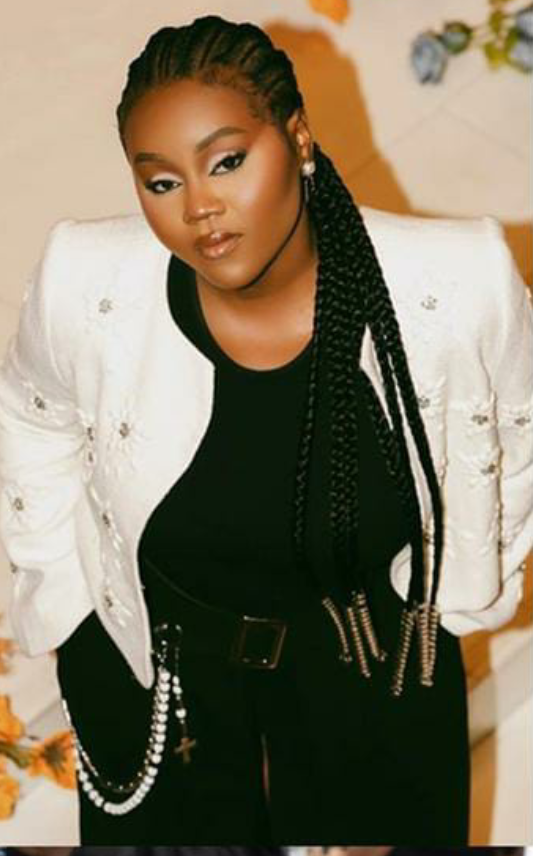
Director Pink Claps Back at Divisive Comment, Champions Talent Beyond Tribe
In a digital world where social media can quickly turn celebration into controversy, Director Pink, one of Africa’s most prominent female music video directors, recently reminded Nigerians and Africans alike that talent transcends ethnicity. What started as a proud reflection on her achievements took an unexpected turn when a user’s
In a digital world where social media can quickly turn celebration into controversy, Director Pink, one of Africa’s most prominent female music video directors, recently reminded Nigerians and Africans alike that talent transcends ethnicity. What started as a proud reflection on her achievements took an unexpected turn when a user’s divisive comment on her X post sparked conversation about tribalism, recognition, and professional etiquette in Nigeria’s online spaces.
Director Pink, who has steadily risen to become a household name in the Nigerian music and entertainment industry, took to X to share her joy over her success. In her post, she wrote, “What a time to be the biggest female video director in Africa.” Her words were meant as a personal celebration, highlighting her journey in an industry that has historically been dominated by men, and as a subtle call to recognize the achievements of women breaking barriers in creative fields. The tweet was immediately met with congratulatory messages from fans, fellow creatives, and admirers who have followed her work over the years, applauding her consistency, vision, and impact on the industry.
However, not all responses reflected the same spirit of celebration. Among the flurry of positive engagement was a comment from an X user, Nwaeze Oyibo, who wrote, “Show me any female ewedu video director. Ndi igbo will always outclass ewedu people.” The comment, viewed by many as both ethnically charged and dismissive, appeared to equate excellence with tribal identity, framing Director Pink’s achievements through a lens of ethnic rivalry. The term “ewedu people,” a derogatory online slang often used to refer to Yoruba individuals, was particularly inflammatory and drew immediate attention from users familiar with Nigeria’s complex ethnic dynamics.
The online community quickly noticed the tension inherent in the exchange, and screenshots of the interaction began circulating. While some users seemed poised to escalate the confrontation, many waited to see how Director Pink would respond. In a digital environment where public figures often react hastily or defensively, her response would be watched closely.
Director Pink’s reply was a masterclass in restraint, professionalism, and clarity. She wrote, “I appreciate the love, but there’s no need to downgrade any tribe to celebrate excellence. Talent has no tribe. One love.” Her statement was concise yet powerful, immediately reframing the conversation. By refusing to engage in tribal comparison, she affirmed her success without diminishing the identities of others. The tone was calm, respectful, and assertive, demonstrating her understanding of the responsibility that comes with her platform.
The response was widely praised across social media. Users commended her for handling the situation with grace, emphasizing that she successfully addressed the harmful narrative without resorting to insults or counterattacks. Many pointed out that the exchange highlighted the broader issue of online tribalism in Nigeria, where achievements are too often contextualized through ethnic superiority rather than personal merit. In this instance, Director Pink’s words reminded the public that true recognition should celebrate talent and hard work, not reinforce division.
The incident also sparked discussion about women’s representation in Nigeria’s entertainment industry. Director Pink’s original post underscored her position as a leading female director in a male-dominated field. Some commenters noted that the divisive reply seemed to attempt to downplay her achievement as a woman, shifting focus away from the significance of her work to a tribal comparison. Director Pink’s response, therefore, served not only as a rebuttal to an ethnically insensitive comment but also as a statement supporting female excellence in spaces where women are still fighting for visibility and recognition.
Industry insiders weighed in, noting that Nigeria’s creative sectors—music, film, and video production—thrive on collaboration among individuals from diverse ethnic backgrounds. The Nigerian entertainment scene, especially the music video industry, has been defined by partnerships that cross tribal lines, combining unique talents and perspectives to produce content consumed globally. Director Pink’s assertion that “talent has no tribe” resonated deeply with professionals who understand that creativity is universal and cannot be confined to ethnic identity.
The conversation also highlighted the pressures that public figures face online. Celebrities and creatives often navigate a space where praise comes entangled with harmful commentary, and where missteps can go viral within minutes. By responding with composure, Director Pink not only defended her values but also set a standard for engagement in situations where social media interactions could easily escalate into conflict.
While the original commenter did not publicly retract their statement, the overwhelming response to Director Pink’s message shifted the narrative. Social media users quickly moved from focusing on the negative comment to celebrating her work. Clips of her music videos, collaborations with top Nigerian artists, and her accolades were widely shared as evidence of her influence and impact. Her ability to redirect the conversation from tribal division back to merit-based recognition underscored the strength of her professional standing and her commitment to positivity in public discourse.
Observers also noted that this incident served as a timely reminder of how easily discussions about success in Nigeria can become entangled with tribal identity, even when ethnicity is irrelevant to the achievement. Many praised Director Pink for demonstrating that it is possible to assert one’s accomplishments without demeaning or disrespecting others. Her approach reflected both maturity and awareness of the broader social implications of public statements.
The exchange further reinforced the importance of leadership in digital spaces. By refusing to let her success be overshadowed by tribal bias, Director Pink demonstrated that leadership is not only about professional accomplishments but also about the example one sets in handling criticism and sensitive topics. Her response was a lesson in professionalism, showing that it is possible to defend oneself and one’s achievements while promoting unity and mutual respect.
As the discussion continued to trend, the majority of social media engagement focused on Director Pink’s accomplishments, her influence in the industry, and the positive values reflected in her response. The incident became an example of how digital interactions, even when initially negative, can serve as opportunities for dialogue, reflection, and education about the importance of respecting diversity while celebrating excellence.
Ultimately, what could have been a minor online spat turned into a moment that reinforced the ideals of inclusivity, meritocracy, and professional dignity. Director Pink’s measured and thoughtful engagement not only protected her reputation but also amplified a message of unity and respect, reminding Nigerians and Africans that true excellence should inspire, not divide. In a world where social media often magnifies the worst impulses, her words stand as a powerful reminder that celebrating talent does not require tearing others down and that leadership and influence are reflected not only in creative output but also in the way one navigates public spaces.
Director Pink’s interaction with the divisive X comment will likely be remembered not just for the controversy, but for the clarity, composure, and conviction with which she responded. It demonstrated that talent is universal, success is personal, and recognition should never be bound by tribe. In a country where ethnic tensions frequently dominate public discourse, her words resonated as a message of hope, professionalism, and shared humanity, proving that the digital space can indeed be a place for meaningful conversation and reflection when handled with wisdom and care.
Share this post
Related Posts

“Cashing Out on Arsenal Tears!” — Joeboy Sparks Online Frenzy with ₦3M Bet on Real Madrid in UCL Showdown
In what has become one of the most talked-about moments leading up to tonight’s UEFA...

Nigerian Family Alleges N151 Million Police Extortion in Shocking Illegal Detention Scandal
In a scandal that has sent ripples through Nigeria’s justice and human rights communities, the...

FRSC Warns Celebrities as TikToker Peller Faces Prosecution Over Road Crash
The Federal Road Safety Corps has moved to prosecute popular TikToker Habeeb Hamzat, widely known...