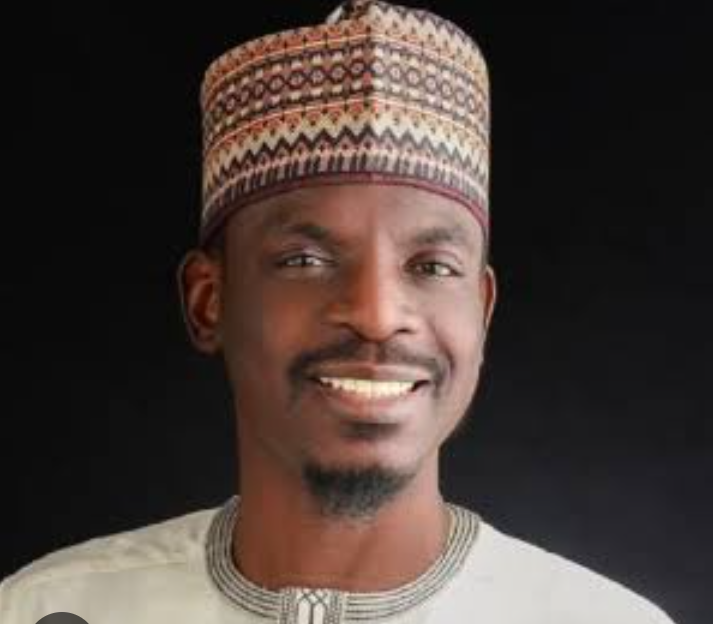
Bashir Ahmad Slams ‘Double Standards’ in Global Military Reporting: US vs Russia
Nigerian political commentator and tech entrepreneur Bashir Ahmad has ignited fresh debate over the way global media and leaders describe military interventions, highlighting what he perceives as glaring double standards in reporting U.S. and Russian actions abroad. Ahmad, known for his incisive social media commentary, took to X.com on Saturday
Nigerian political commentator and tech entrepreneur Bashir Ahmad has ignited fresh debate over the way global media and leaders describe military interventions, highlighting what he perceives as glaring double standards in reporting U.S. and Russian actions abroad. Ahmad, known for his incisive social media commentary, took to X.com on Saturday to draw attention to a discrepancy in the narratives surrounding Russia’s invasion of Ukraine and the recent U.S. military operation in Venezuela.
“When Russia attacked Ukraine, it was rightly called a crime. Now the United States attacks Venezuela and suddenly it’s described as ‘liberating the people.’ What a staggering hypocrisy!” Ahmad wrote in his post, which quickly went viral, accumulating tens of thousands of views and sparking widespread discussion among international affairs observers and casual social media users alike. His remarks tap into a broader and longstanding global debate over the framing of military interventions, the selective application of international law, and the media’s role in shaping public perception.
Ahmad’s comments arrive against the backdrop of escalating tensions in Latin America following the dramatic removal of Venezuelan President Nicolás Maduro from power by U.S. forces, an operation that many world leaders and international organizations have described as unprecedented. While U.S. officials framed the intervention as necessary to restore democracy and protect human rights in Venezuela, critics argue that the move mirrors tactics historically condemned when used by other world powers, notably Russia’s widely condemned incursion into Ukraine.
For many analysts, Ahmad’s critique resonates because it exposes a pattern in which similar actions are evaluated through markedly different lenses depending on the actors involved. In 2022, Russia’s military advance into Ukraine was broadly described in global media as a blatant violation of sovereignty and international law. Reports highlighted civilian casualties, the displacement of millions, and the destruction of critical infrastructure. Yet, when American forces move into a foreign country—even to arrest a sitting head of state—the framing often shifts to emphasize liberation, stabilization, or humanitarian motives, language that critics argue serves to obscure the controversial legality of such operations.
The disparity in descriptions has real-world implications. Ahmad and other commentators point out that inconsistent narratives can influence global public opinion, justify certain military actions, and even shape the policies of other nations in response. If interventions by certain powers are consistently labeled criminal or aggressive while others are depicted as noble or necessary, it raises critical questions about the universality of international law and the selective enforcement of norms.
The discussion has since spilled over into broader debates on social media platforms. Some users echoed Ahmad’s concerns, highlighting that language and framing can significantly impact perceptions of legitimacy. “This is why so many people see double standards in geopolitics,” wrote one X.com user. “Crimes are crimes regardless of who commits them. If Russia is condemned, the U.S. shouldn’t be praised for the same thing.” Others, however, defended the U.S. approach, arguing that each situation must be considered in context, pointing to the humanitarian crises in Venezuela and the Maduro government’s alleged corruption and authoritarianism as justification for intervention.
This debate also intersects with the role of international organizations, particularly the United Nations, in mediating conflicts and setting the standards for acceptable military conduct. Critics have long argued that powerful nations often circumvent these international frameworks when convenient, raising questions about the effectiveness of global governance structures. Ahmad’s post, in particular, reflects a growing frustration among observers who feel that the rules appear unevenly applied and selectively enforced, depending on which countries are involved.
The contrast between media coverage of U.S. and Russian actions is further complicated by domestic political narratives. In the United States, government officials often frame military interventions abroad in terms of moral responsibility, emphasizing democracy promotion, human rights, or the fight against oppressive regimes. Conversely, Russian and other non-Western military actions are frequently portrayed in Western media as aggressive, expansionist, or unlawful, even when similar arguments are made in defense of those interventions. Ahmad’s observations underscore the way these narratives can diverge dramatically depending on geography, historical alliances, and political interests.
Experts in international relations suggest that the framing of military action is never purely neutral. According to Dr. Emeka Obi, a political science scholar specializing in media and diplomacy, “Language shapes legitimacy. When you call an attack ‘liberation,’ it frames it as positive, whereas calling an identical attack a ‘crime’ frames it as illegitimate. The problem isn’t just what happens on the battlefield, it’s how people are told to perceive it.” Ahmad’s post taps into precisely this concern, highlighting how the same kind of action—intervening militarily in another country—can be cast in radically different lights depending on the origin of the attack.
Beyond social media and expert analysis, Ahmad’s critique has sparked conversations among ordinary citizens about fairness, transparency, and accountability in global politics. Many feel that the selective labeling of military action contributes to a sense of mistrust in international institutions and major powers, and diminishes the credibility of claims about moral authority or humanitarian concern. Others see it as a call to scrutinize every intervention on its own merits, rather than accepting official narratives at face value.
This issue is unlikely to fade quickly, particularly as U.S.-Venezuela tensions continue to simmer and the international community assesses the implications of recent military actions. Observers will be watching closely to see how other nations respond, how the media frames ongoing developments, and whether there will be a reevaluation of the principles that guide interpretations of foreign interventions. Ahmad’s commentary serves as a reminder that public perception and the language of reportage are inseparable from the events themselves, and that questions of bias, double standards, and geopolitical interest remain as pressing as ever.
Ultimately, Bashir Ahmad’s viral post may be less about condemning any single government action and more about highlighting the inconsistencies in global discourse surrounding war, intervention, and sovereignty. By drawing attention to perceived double standards, Ahmad is inviting a conversation about fairness, consistency, and the ethical application of international norms. Whether one agrees with his perspective or not, the discussion he has sparked underscores the continuing need for critical engagement with how military actions are portrayed, interpreted, and justified in the public sphere.
As debates continue across social media, news outlets, and academic circles, Ahmad’s succinct but powerful observation—“What a staggering hypocrisy!”—has crystallized a sentiment that many feel but few articulate as plainly. The statement reminds policymakers, journalists, and citizens alike that while military operations may be justified differently in different contexts, the principles of accountability and consistency remain crucial to the credibility of international law and the trust of global audiences.
Bashir Ahmad’s commentary, with its viral reach and pointed clarity, is likely to remain a reference point in discussions about media bias, geopolitical double standards, and the moral complexities of international military interventions. Whether viewed as an indictment of U.S. foreign policy, a critique of global media, or a broader call for fairness, it has undeniably succeeded in sparking dialogue on some of the most contested and consequential issues in modern geopolitics.
Share this post
Related Posts

“Stay With That Man First”: Woman’s Viral Marriage Advice Sparks Heated Debate Online
A woman identified as @Ryann has ignited a fiery discussion across social media platforms after...

“If Only She Knew” – Nigerian Man Recounts Shocking Encounter with British Woman Who Ignored Airplane Mode Rule on Flight to Croatia
In a rather amusing yet thought-provoking travel experience, a Nigerian man has narrated his encounter...

Boko Haram Displays Over 100 Abducted People from Kwara, Accuses Government of ‘Propaganda’
In a disturbing and widely shared video that has sent shockwaves across Nigeria and beyond,...